
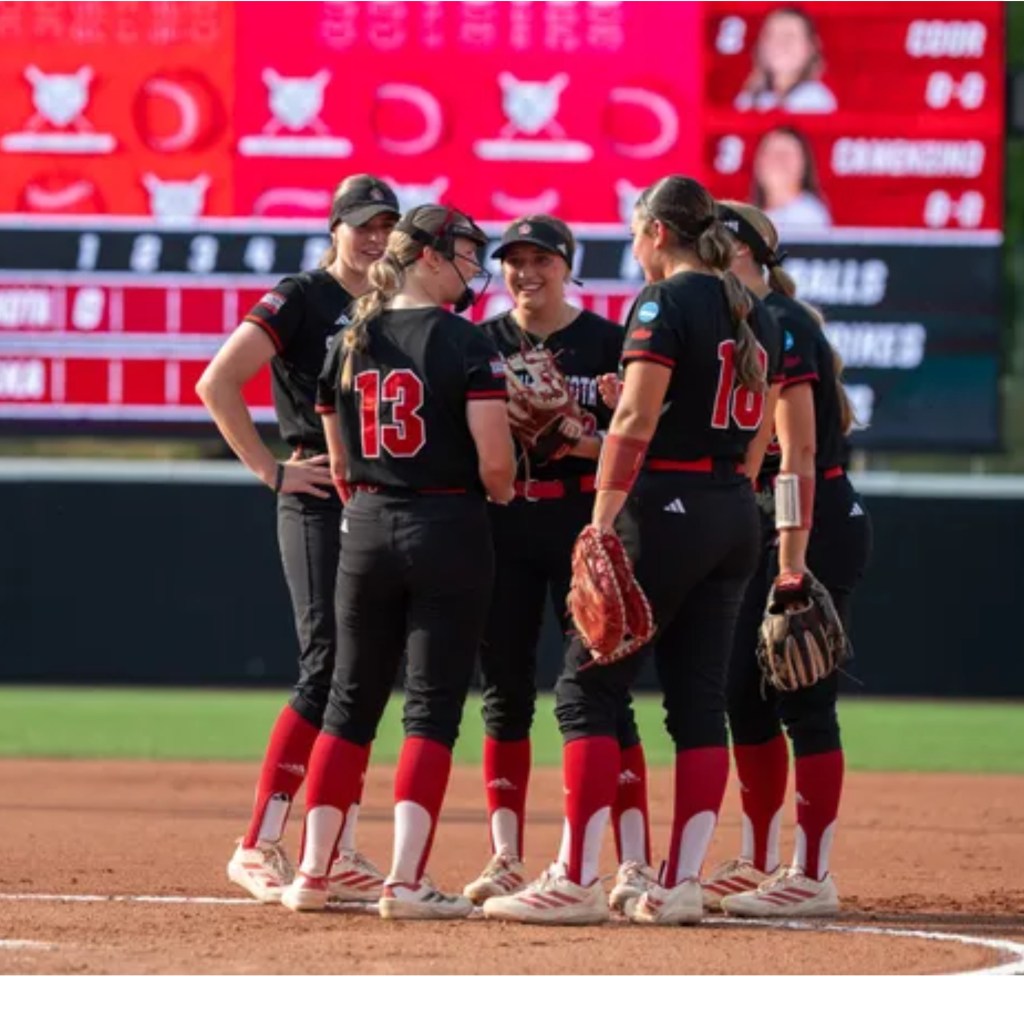
The road to Oklahoma City is officially underway. Sixty-four teams entered the circle with a singular dream: lifting the national championship trophy at Devon Park. For the uninitiated, college softball is one of the fastest, most electric, and highest-intensity postseasons in all of sports.
Whether you are a casual fan jumping on the bandwagon or a die-hard tracking every pitch, this is your definitive, comprehensive guide to how the NCAA Division I Softball Tournament works, who to watch, and how the drama will unfold.
The Format: How the Tournament Works
The NCAA Softball Tournament is broken down into three distinct, grueling stages. It forces teams to show both top-end dominance and deep roster resilience.
1. The Regionals (May 15–17)
- The Setup: 64 teams are split across 16 campus sites (hosted by the top 16 national seeds). Each site features a four-team, double-elimination bracket.
- The Goal: You must win the regional bracket to advance. If you lose twice, your season is over. 16 survivors move on.
2. The Super Regionals (Late May)
- The Setup: The 16 remaining teams are paired up for a traditional high-stakes weekend. The higher-seeded team typically hosts a best-of-three series against their challenger.
- The Goal: Win two out of three games. The 8 winners punch their tickets to the promised land.
3. The Women’s College World Series (WCWS) (May 28 – June 4)
- The Setup: Held annually at the legendary Devon Park in Oklahoma City, the final eight teams play in another double-elimination bracket until just two teams remain.
- The Finals: The final two teams face off in a dramatic, best-of-three Championship Series to decide the national champion.
The Powerhouse Narrative: Seed Shocks and Heavy Hitters
The selection committee set the softball world on fire with its seeding decisions, establishing a tournament field layered with chips on shoulders and standard-bearers.
- The Tide At the Top: In a surprise twist that dominated headlines, Alabama captured the No. 1 overall national seed. They bypassed traditional front-runners to anchor the top of the bracket, turning the Tuscaloosa Regional into the epicenter of the softball universe.
- The Longhorn Response: Earning the No. 2 overall seed, Texas entered the postseason on an absolute tear after winning the fiercely competitive SEC Tournament Championship. Backed by the ferocious bat of Katie Stewart—who hit over .430 with 25 home runs in the regular season—and ace Teagan Kavan, the Longhorns are heavily favored to make a deep run.
- The Crimson Dynasty: You cannot write about college softball without Patty Gasso’s Oklahoma Sooners (No. 3 seed). The multi-time defending champions are no stranger to the bright lights of Oklahoma City. Despite a few regular-season stumbles, they remain the golden standard of the sport and the team everyone is desperate to dethrone.
- The Chasers: Powerhouse programs like Nebraska (No. 4), Arkansas (No. 5), and Florida (No. 6) have already shown their teeth. Florida, in particular, looked utterly terrifying during the opening weekend of Regionals, deploying consecutive mercy-rule victories to cruise through their early matchups.
Key Terms Every Fan Needs to Know
To talk like a softball expert around the water cooler, keep these sport-specific terms in your back pocket:
- The Circle: The pitching area. Unlike baseball’s raised mound, softball is played from a flat, circular chalked area 43 feet from home plate.
- Mercy Rule (Run Rule): If a team is leading by 8 or more runs after 5 innings (or 4 and a half if the home team is ahead), the game is instantly called.
- The WCWS: Short for the Women’s College World Series.
- Slap Hitting: A specialized left-handed hitting technique where the batter takes a running start within the batter’s box to “slap” the ball into holes in the infield, using pure speed to beat out throws.
How to Watch
ESPN platforms hold the exclusive broadcasting rights for the tournament. Early-round Regional and Super Regional games stream heavily on ESPN+, with marquee matchups shifting to ESPN, ESPN2, and ESPNU as the field narrows.
Once the tournament reaches the WCWS in Oklahoma City, prime-time broadcasts take over ESPN, culminating in the national championship series in early June.
Buckle up—the energy is unmatched, the pace is lightning-fast, and the road to Oklahoma City promises plenty of fireworks.

 The Starting IX: Sports for Women by Women
Leave a comment